Concrete yards, gravel tons, fence posts: the math
The three formulas behind most site-work bids, with worked examples: cubic yards of concrete, tons of gravel and posts for a fence run.

You know the routine: drive out with a wheel and a tape, then sit at the kitchen table that night turning feet into yards, tons, posts and bags. Nobody got into the trade to do long division. Here are the three formulas behind most site-work bids, with numbers you can check.
1. Concrete: cubic yards from a slab
A 20 × 24 foot slab, 4 inches thick: 20 × 24 = 480 square feet. 4 inches is a third of a foot, so 480 × 4 ÷ 12 = 160 cubic feet. 160 ÷ 27 = 5.93 cubic yards. Add your own overage for subgrade and spillage, and round up to what the plant will deliver.
| Depth | Yards per 100 sq ft |
|---|---|
| 4 in | 1.23 |
| 5 in | 1.54 |
| 6 in | 1.85 |
2. Gravel and base: tons from area and depth
Gravel is figured the same way in cubic yards, then converted to tons with your supplier's tons-per-yard number for that stone. That number changes with the material and how wet it is, so ask. For example, if your supplier says 1.4 tons per yard: a 12 × 60 foot drive at 6 inches is 720 × 0.5 ÷ 27 = 13.3 yards, × 1.4 = 18.7 tons.
3. Fence: posts for a run
150 feet at 8-foot spacing: 150 ÷ 8 = 18.75, round up to 19 sections, so 20 posts for a straight run. That 20 already includes both end posts. Then add what the formula doesn't see: every corner and two heavier posts per gate. Panels or pickets follow from the sections; concrete per post from your hole size.
Where the misses come from
None of this math is hard. The misses come from doing it ten times a night, by hand, from numbers scribbled in the truck. One missed line on a slab or a sewer run can cost more than a month of software.
How KardinalEye does it
KardinalEye is ROI Airstrike's sibling for every trade except roofing. You draw the job on free 1-ft public aerial photos (lines, areas and counts) and get lengths and areas right away. Enter depth, width and spacing and the drawing becomes cubic yards, tons, gallons, trench yards, bedding stone, posts, bags and panels. It covers 15 job types, from site plumbing, concrete and fencing to metal buildings, paving, landscaping, drainage and pools, with 157 starter items you price yourself.
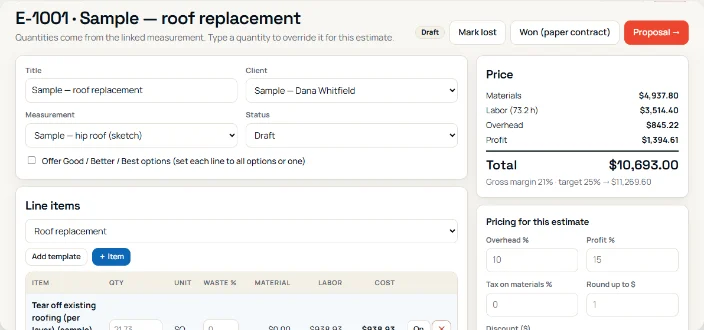
Then it prices from your own book (materials, labor hours, crews, waste, overhead and profit, all traced), sends a Good / Better / Best proposal they sign on screen, and tracks the job to paid. It runs offline in Chrome or Edge once it's open. Measurements from photos are estimates: check them on site before you order materials or sign.
If you're a roofer, read the roof version of this math instead; that's ROI Airstrike's job.
Questions people ask
- How do I figure cubic yards of concrete?
- Length in feet × width in feet × depth in inches ÷ 12, then divide by 27. A 20 × 24 slab at 4 inches is about 5.93 cubic yards before any overage.
- How do I turn cubic yards of gravel into tons?
- Multiply by your supplier's tons-per-yard figure for that material. It varies by stone and moisture, so use their number, not a chart's.
- How many fence posts for a 150-foot run at 8-foot spacing?
- 150 ÷ 8 = 18.75, so 19 sections need 20 posts: 2 end posts and 18 line posts. Then add corners and gate posts.
Keep reading